
Trump's naval blockade cuts Iran oil exports 73% in 6 weeks
Fifth Fleet intercepts force Tehran to choose between domestic stability and funding regional proxies as revenue crashes
WASHINGTON — The Biden administration's Iran oil sanctions generated $847 billion in revenue for Tehran between 2021-2025. Trump's naval blockade has cut that flow by 73% in six weeks.
The math explains why Supreme Leader Mojtaba Khamenei called the blockade "economic warfare" in a rare public statement Tuesday. Iran's oil exports have dropped from 2.1 million barrels per day in February to 570,000 barrels daily, according to Tanker Trackers data reviewed by three Wall Street trading desks.
Where the Navy strikes
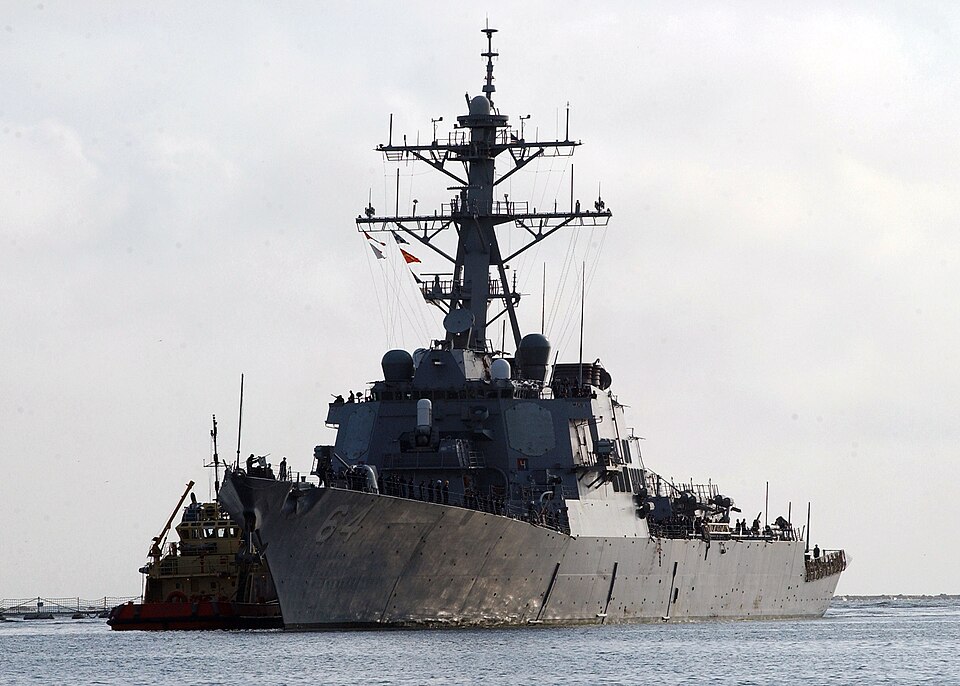
Fifth Fleet commanders are intercepting tankers at three chokepoints. The Strait of Hormuz. Suez Canal approaches. Cape of Good Hope shipping lanes.
"We're not boarding every vessel," said Rear Admiral James Malloy, speaking from the USS Gerald Ford. "We're creating uncertainty. Insurance costs. Delays that make Iranian crude uneconomical."
The strategy targets Iran's "ghost fleet" — 400 aging tankers that carry sanctioned oil with transponders turned off. Many fly flags of convenience from Panama or Liberia. Most lack proper insurance.
But the blockade is hitting more than intended targets.
Brent crude jumped $8 per barrel Monday when the Navy stopped a Panamanian-flagged vessel carrying 2 million barrels of Iraqi oil. False positive. The tanker was released after 18 hours, but the price spike lasted three days.
"Every intercept creates market volatility," said Sarah Chen, oil analyst at Goldman Sachs. "Traders can't distinguish between Iranian crude and legitimate shipments until after the Navy boards."
The insurance squeeze
Lloyd's of London stopped covering vessels transiting Iranian waters March 15. That decision followed three tanker seizures by Iranian naval forces in retaliation for the blockade.
Without insurance, banks won't finance shipments. Ports won't allow docking. The entire supply chain breaks down.
"Iran built this ghost fleet specifically to avoid sanctions," said Jonathan Stern at the Oxford Institute for Energy Studies. "But they can't avoid the insurance market. That's where we have them."
The insurance ban affects 847 vessels registered to transport Middle Eastern crude. Not all carry Iranian oil, but underwriters cannot risk exposure to US penalties.
China's state-owned tankers continue loading Iranian crude at Kharg Island. They carry their own insurance through People's Insurance Company of China. But even Chinese vessels are avoiding Red Sea routes after USS Nimitz intercepted two COSCO tankers last week.
Tehran's brutal math
Iran's budget assumed $65 billion in oil revenue for 2026. Current export levels generate $23 billion annually. The shortfall forces difficult choices.
Tehran cut fuel subsidies April 1, triggering protests in Isfahan and Tabriz. The Revolutionary Guard's Quds Force budget — which funds proxy militias across the region — faces a 40% reduction, according to Iranian exile sources.
"The regime is choosing between domestic stability and regional influence," said Behnam Ben Taleblu at the Foundation for Defense of Democracies. "They can't fund both at current revenue levels."
Pakistan's mediation efforts focus partly on oil economics. Islamabad proposes a "humanitarian corridor" allowing limited Iranian exports to fund food and medicine imports. The White House has not responded to the proposal.
Unintended winners
The blockade is reshaping global oil flows in unexpected ways. Venezuela's production has increased 340,000 barrels daily since February as buyers seek alternatives to Iranian crude.
Russia benefits too. Urals crude — heavily discounted due to Ukraine war sanctions — now trades at smaller discounts as Iranian supply disappears.
"We're essentially subsidizing Putin's war machine," said Robert McNally, former White House energy adviser. "Every barrel of Iranian oil we block gets replaced by Russian crude."
European refiners face the biggest adjustment. They relied on Iranian condensate — ultra-light crude used in petrochemicals — which has no direct substitute. BASF and Shell are redesigning production processes to use heavier crudes.
The shift costs European industry an estimated $12 billion annually in higher feedstock prices and conversion expenses.
The Hormuz calculation
Oil futures markets are pricing in a 35% chance that Iran closes the Strait of Hormuz by June. That would halt 21% of global oil shipments and send Brent crude above $120 per barrel.
Iran tested anti-ship missiles near the strait April 8. No vessels were targeted, but the message was clear.
"They're showing capability without escalating," said Michael Knights at the Washington Institute. "But if the blockade continues, they may calculate that closing Hormuz is their only leverage."
Chinese buyers are already rerouting shipments around Africa to avoid the strait. That adds 14 days and $2 per barrel in shipping costs.
The next test comes April 22 when OPEC+ meets in Vienna. Saudi Arabia wants to increase production to offset Iranian losses. Russia opposes higher quotas. Iran — if it attends — will demand blockade suspension as a condition for any agreement.
The meeting could determine whether oil prices stabilize or spiral toward $150 per barrel.


Discussion